
Soft Skills That Will Actually Get You Hired in 2026 (And Keep You There)
Let me be honest with you for a second.
You may be the most knowledgeable person about every trending technique in your class. You might even be the one with the top GPA in your college year, but if you are unable to get yourself hired for the jobs you seek, why is that?
It is because technical knowledge may get you an interview but soft skills will decide whether you can be successful in getting the job or not.
And guess what? Soft skills aren't something that one comes out of college knowing everything about. In Nepal, where a tech revolution is happening right now, I have seen many recent graduates struggling with basic communication and coordination in their first workplace after having learned technical skills to the best of their capabilities.
The good news is that these skills can be developed.
According to the World Economic Forum's Future of Jobs Report, soft skills like creative thinking, resilience, and communication are among the top skills employers will prioritize through 2030. This isn't a trend it's the new baseline.
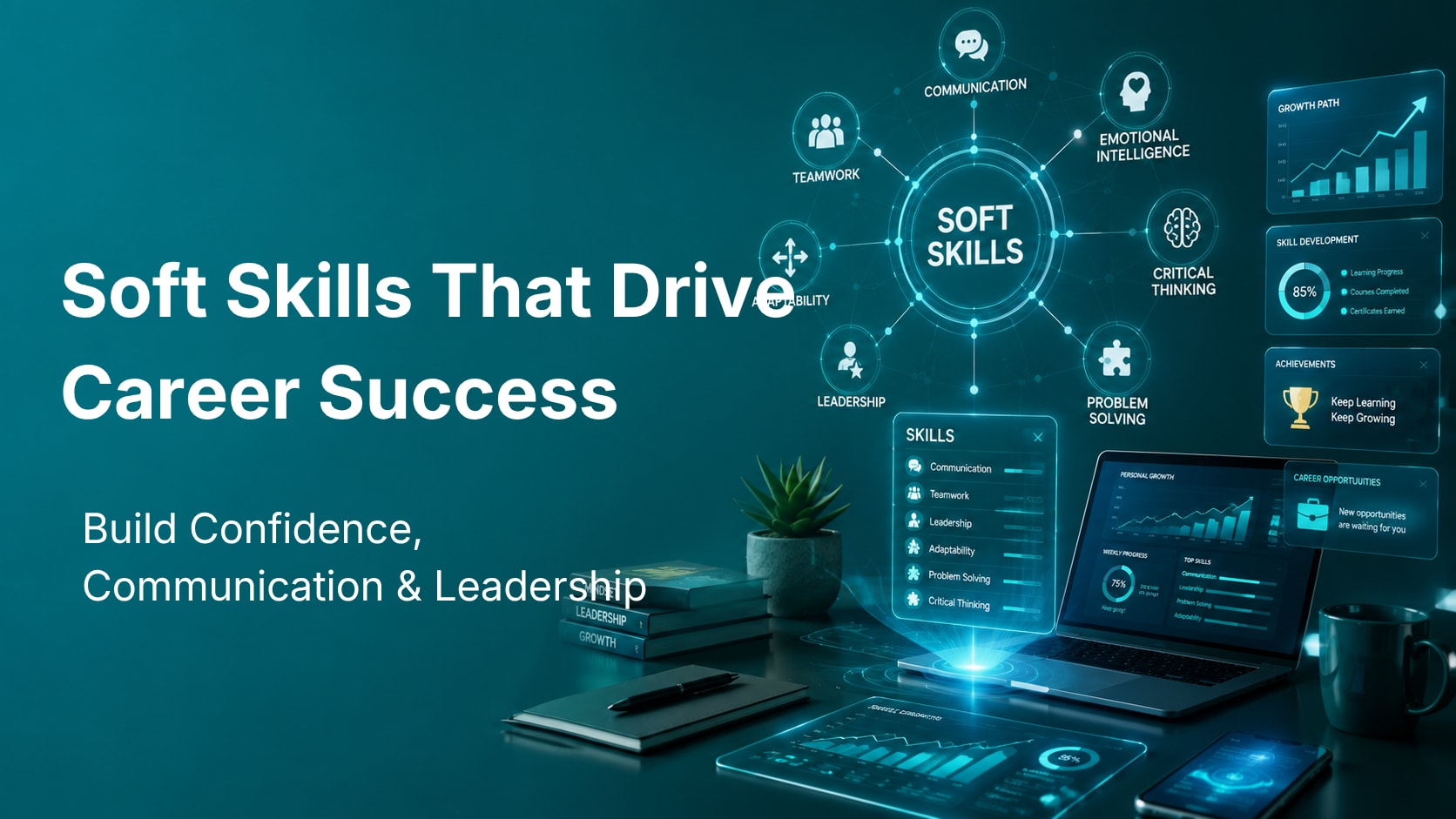
Now let's get into the soft skills that every student entering the workforce absolutely needs and practical ways you can actually start building them today.
1. Communication: The Skill That Opens Every Door
The significance of this point becomes quite apparent; yet many people overlook the significance of 'good communication' in the workplace setting.
To begin with, good communication is certainly not about having an eloquent style of speaking or writing or being grammatically impeccable. Good communication lies in one's capacity to simplify complex issues and concepts, to convey a clear message and ensure that the message is understood as it should be.
In 2026, communication also includes async written communication on platforms like Slack, Notion, email, and video calls — because remote and hybrid work is now the norm, not the exception. A LinkedIn Workplace Learning Report found that communication is consistently ranked as one of the most sought-after skills by hiring managers worldwide.
How to build it: Start by recording yourself explaining a topic for 2 minutes. Watch it back. Notice where you lose clarity, where you repeat yourself, where you go off track. Do this weekly and you'll improve faster than you think. Tools like Grammarly can also help you sharpen your professional writing in real time.
2. Emotional Intelligence (EQ): The Skill That Makes You Someone People Want to Work With
This refers to your capability to be aware of your emotions and manage them, as well as those of others surrounding you.
Reflect on an occasion when you were confronted with some feedback. Did you feel like defending yourself? Did you shut out the speaker? Or did you just listen to him or her without any judgment?
This is how your EQ operates in that scenario.
The companies of 2026 will be recruiting EQ individuals for building a conducive organizational culture and conflict resolution.
Psychologist Daniel Goleman, who popularized the concept of emotional intelligence, argues in his foundational work that EQ matters more than IQ for long-term career success. Many hiring managers today say they'd rather hire someone with great EQ and average skills over someone with excellent skills but poor emotional control.
How to achieve this: Engage in reflection every day. Whenever you face something that frustrates you, stop for a moment and ask yourself questions like: “Why do I feel like this?” and “What is really needed by the other person?”
3. Adaptability: Because the Job You're Hired For Today Might Look Different in 6 Months
Change is a constant process in 2026. The way people perform their jobs will be transformed with AI. Old tools and applications are becoming outdated, while whole industries are changing beyond imagination.
Adaptability refers to one's readiness for change and flexibility under circumstances that require adaptation. It means being the person who is capable of thinking outside the box to deal with new situations rather than getting frustrated by how things change from how they used to be.
In the case of students in Nepal, adaptability is especially crucial as the local IT industry is yet in its developing stage. Startups change course and directions, roles are changing, and sometimes, one needs to fulfill multiple functions right from the very beginning of their career paths. Our blog on non-tech to tech career transitions in Nepal is a great read. It's full of stories of people who adapted and won.
How to do it: Put yourself in strange situations on a regular basis. Enroll in classes that have absolutely nothing to do with your area of specialization. Volunteering for tasks that you've never attempted before can be very helpful in this regard.
4. Critical Thinking: Going Beyond "Just Following Instructions"
The employers of tomorrow will not be satisfied with employees who can simply get jobs done. They will want employees who think.
Thinking critically entails examining an issue from different perspectives, challenging the assumptions, and taking a decision grounded in facts and not just feelings. Thinking critically means asking, “Why do we always do it this way?” whereas everybody else takes it for granted.
In a world where AI technology can do our job, what sets us apart is judgment, perspective, and insight.The Harvard Business Review has extensively covered how critical thinking is now a core differentiator in the modern workplace.
How to build it: When you read something online, ask yourself: Who wrote this? Why did they write it? What might they be leaving out? Practice this daily, and you'll develop sharper thinking over time. Platforms like Khan Academy also offer free logic and reasoning exercises that are surprisingly effective.
5. Time Management and Self-Discipline: The Foundation of Everything Else
One thing that no one ever tells students is that your boss will not manage your time.
You used to have class schedules in college; assignments were due at certain times according to what your teacher told you, and you even had exams that came at scheduled times. In the work environment, however, you may find yourself making choices regarding prioritization, allocation of time, and even who to turn to when stuck.
Failure to manage one's time well ranks high up there as a common cause of failure amongst young professionals.
How to build it: Start using a simple system right now. Every morning, write down your three most important tasks for the day. Do those first before anything else. Free tools like Google Calendar or Notion make this easy. The tool doesn't matter, the habit does.
Also, if you're heading into an internship soon, make sure you read our guide on how to get an internship as a BCA student: time management is one of the first things internship supervisors look for.
6. Teamwork and Collaboration: You're Almost Never Working Alone
Unless you’re a lone freelancer, you’ll have to deal with people. But “dealing with people” is not an easy task.
Effective teamwork implies being proactive without having to be told what to do, being generous in recognition and attribution, nipping potential disputes in the bud, and being dependable.
The ability to team up with other specialists, such as developers with designers, marketers, and project managers, will give you a huge edge in the work environment of 2026.Tools like Slack, Trello, and Figma have made remote collaboration more common, but the human skill of being a good teammate is still 100% on you.
How to build it: Take every group project in college seriously. Don't let one person carry the whole thing. Practice contributing meaningfully to a team, even when it's just an academic assignment. That habit carries forward.
7. Problem-Solving: Bringing Solutions, Not Just Problems
Every place of work will encounter difficulties. The only difference between the two individuals in the early stages of their career is that one individual approaches his/her supervisor with the problem and some solutions to it while the other individual simply approaches him/her with the problem.
Solving a problem at work does not necessarily mean solving the problem but rather taking the initiative to solve it before bringing it to the attention of your superior.
Open source contribution is one of the best real-world problem-solving training grounds available to students. Our in-depth guide on how to get into Google Summer of Code (GSoC) from Nepal and India is a perfect starting point if you want to challenge your problem-solving at a global level.
How to develop it: The next time you encounter an obstacle either at college or an internship or elsewhere, take 15 minutes to think of how to solve it before seeking any assistance from anyone else. Once you seek assistance, come prepared with whatever effort you have made so far on your own.
8. Networking and Relationship Building: Because Opportunities Come Through People
It feels awkward for many introverts, but I can totally get it. However, let’s not beat around the bush here; it is about creating real connections with people in your field.
Your next opportunity will most probably come from someone you know. It does not have to be anyone famous; perhaps a fellow student who took up a job in some company and remembered you from a hackathon. Or even a LinkedIn connection who would recommend you for some position.
In Nepal's tech and digital marketing industry especially, the community is small and well-connected. Being known as someone who is curious, helpful, and genuine goes a long way. LinkedIn remains the most powerful professional networking tool available to students in 2026 and it's completely free to get started.
We've also written a practical guide on getting a job after your internship in Nepal networking is a major theme throughout it.
How to do it: First things first. Engage in meaningful conversation with experts of your industry through LinkedIn articles. Attend local technology meets or workshops. Interact with your seniors. You don’t necessarily have to be a social butterfly; you just need to be consistent.
9. Receiving and Giving Feedback: A Skill Most People Get Wrong
What happens when somebody says you need to improve something about yourself?
Either you defend yourself or you apologize too much and get depressed. None of these are correct ways of responding to criticism. You should listen, clarify, thank the criticizer, and finally put his/her advice into practice.
Feedback giving is an equal part of constructive communication, because you will sooner or later find yourself in situations, where you will have to evaluate others' work or manage more junior colleagues and, thus, give them constructive criticism. This is a very rare ability, which you will be really appreciated for.
How to develop it?: First, you should become more receptive to criticism – always ask what needs improvement in your work. Do not ask "Was it okay?", but "What could I have improved in this piece of work?". You should get used to such feedback, especially when they sting a little bit. Also, you can read such excellent books as Thanks for the Feedback by Douglas Stone and Sheila Heen.
10. Curiosity and a Learning Mindset: The Meta-Skill That Powers Everything Else
The world in 2026 celebrates those who are truly curious individuals. Curious enough to ask questions, tinker with different technologies, expand their reading beyond their discipline, and never feel that they know "enough."
This goes beyond having ambition. This is about understanding that the instant you stop learning is when you begin to fall behind. Individuals who understand that capabilities can be learned always surpass those who consider themselves to be naturally talented in any field whatsoever.
Every single skill on this list can be improved. Every gap can be filled. But only if you approach your career with the mindset of a student, someone who is always growing, always questioning, always open to being wrong.
Our blog on the future of AI and ML jobs in Nepal is a great example of why curiosity matters, the landscape keeps shifting, and the people tracking it closely will always be ahead.
Final Thoughts
Being curious in the year 2026 gives an edge. The ones who are always questioning things, try out different tools, do not limit yourselves to only reading materials within your own subject area, and are never complacent with having learned enough.
It's not just a matter of being determined. It's all about understanding that once you stop learning, then you're headed downhill from there. People who embrace learning and the belief that abilities can be cultivated and improved upon are better performers in every arena than those who have a fixed mind set in terms of talent.
As a student, before joining the job market whether it is for completing BCA, BSc.CSIT, BBA or anything else, please understand this sooner rather than later. Technical expertise will enable you to get a job, soft skills will make you successful. Students who have progressed rapidly in their careers are often not those who had the highest amount of technical knowledge right at the outset.
Want to make sure your technical skills are matching up with the soft ones? Check out our courses in Data Science & Machine Learning, Full Stack Java, Graphics Design with AI, and Digital Marketing Mastery all built with Nepal's job market in mind.
Also, if you're actively building your career profile, don't skip our portfolio building guide for Nepal. A strong portfolio combined with strong soft skills is genuinely hard to beat.
Start building today. Not because a company wants you to but because these skills make you genuinely better at everything you do.
Explore all career resources and courses at Knowlary.com and take your next step with confidence.