
Why Programming Is Essential for School Kids and Students in Nepal And How to Start (2026)
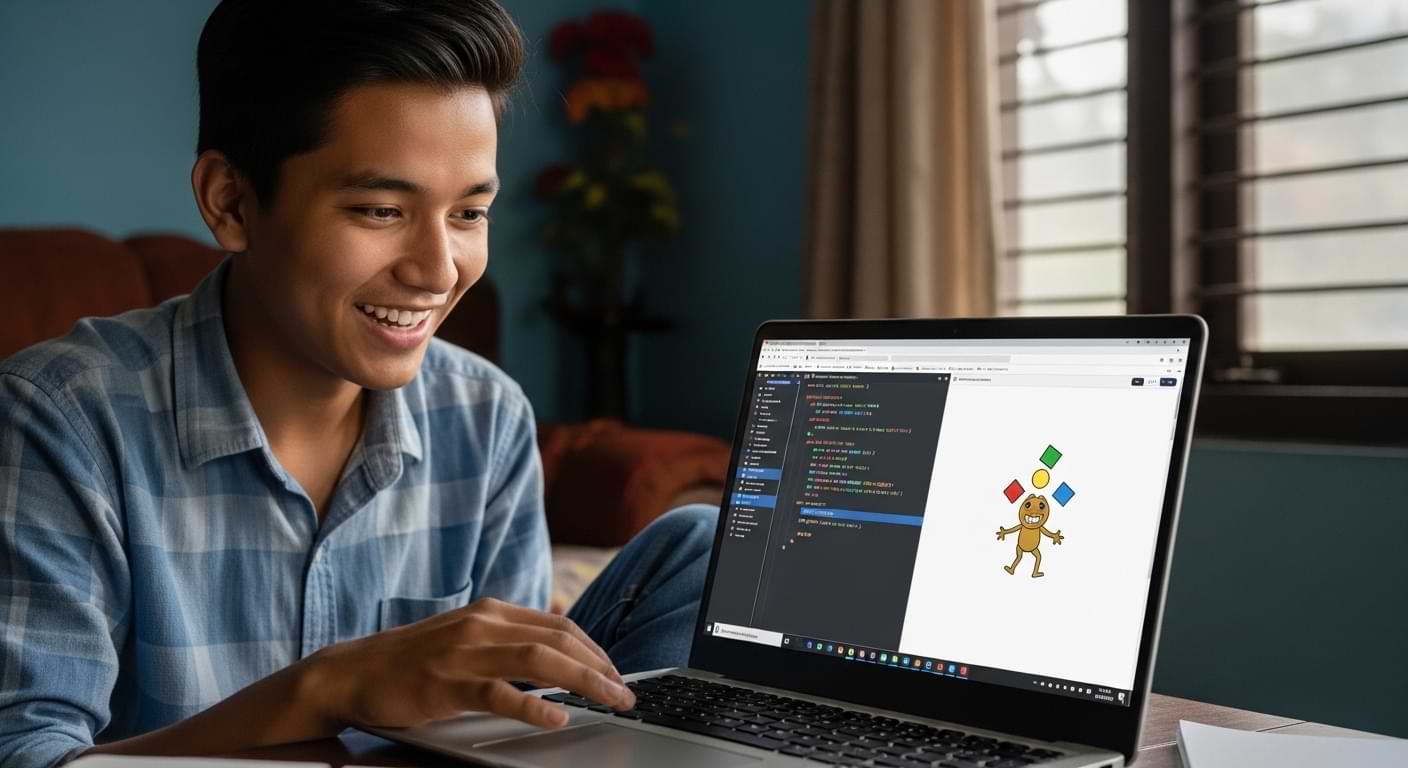
A 10-year-old in Pokhara moves colorful blocks around on a screen and watches a cartoon cat do exactly what she told it to do. A 16-year-old in Kathmandu writes his first program using the Python language and watches numbers line up perfectly. Neither of these children has ever taken a computer science course. But both have just done something that will quietly change their entire future.
School children and students across Nepal are increasingly finding out about computer programming. They are finding out about it not because a program required them to, but because their own curiosity has drawn them into this new world. And the people who understand this are giving themselves a real advantage.
This guide is for two groups of people:
parents of school children who are wondering if their children should be coding right now, and students in schools and colleges who are wondering if computer programming is worth their time and energy. The answer to both questions is the same: yes, and the answer should be arrived at in the year 2026.
Programming Is No Longer Just for "Computer People"
The most crucial mindset change has to happen first.
Ten years ago, programming was mostly a skill of software engineers and computer science graduates. In 2025, it will be integrated into every business that runs a website, an app, or has some type of digital tool; for example, banking, health care, agriculture, education, journalism, government.
This shift is happening very quickly in Nepal. Mobile banking, e-government, fintech startups, edtech, digital marketplaces are all growing exponentially. All of these require people who understand how to create a piece of software. Students and children (i.e., kids) learning programming now will have the ability to enter that job pool years before their peers.
Why School Kids (Ages 6–12) Should Start Coding Early
Programming is not about a career for younger children. It is about learning to think in a way that will help them in all subjects, all hobbies, and all situations for the rest of their lives.
1.It Teaches Logical Thinking from a Young Age
When programming, a child will give instructions to a computer. However, they will soon realize that they cannot simply say "move forward." The computer will not know how many steps to move, in which direction to move, or what to do afterwards. However, this is exactly what is needed to solve math problems, write effectively, or make decisions.
2.It Makes Learning Feel Like Play
The best programming tools for young children look and feel like games. One such tool is Scratch, created by MIT. Kids will program characters to move, tell stories, build animations, and even make simple games using colorful blocks they can drag and drop. However, they will be learning programming concepts and think they’re only playing. That is how learning should be for a child.
3.It Builds Patience and Resilience
When a child's code does not work the first time — and it often will not — they have to figure out why. Finding and fixing that mistake (called debugging) teaches patience, persistence, and the ability to stay calm when something does not immediately go right. These are life skills, not just coding skills.
Why School Students (Ages 13–18) Should Learn Programming Now?
For older students in secondary school and +2, programming moves from a developmental tool into a genuine career and life advantage.
1. It Opens the Highest Paying Careers in Nepal
The technology industry is perhaps the fastest-growing industry in Nepal, and the pay associated with technology-based jobs is consistently the highest-paying for young professionals in the country. A student learning to program during the course of their academic years enters the university or the workforce with experience that the vast majority of their peers simply don’t have.
For a detailed look at which tech skills are currently most in demand and best compensated in Nepal, see our breakdown of in-demand tech skills in Nepal for 2025.It Creates Real Income
2. Opportunities While Still Studying
Programming is perhaps the only academic skill set that can create income opportunities for students. While other skills and academic pursuits are unlikely to generate income for the student, learning to program can create income opportunities for the student through freelance work, the development of small products, and contributing to open-source code that has the potential to generate income.
For a broader look at where AI careers in Nepal are heading, read our guide on the future of AI/ML jobs in Nepal.
3. It Builds a Portfolio Before University Applications
A student who arrives at a university interview or scholarship application with two or three real programming projects hosted online a working website, a small app, a data visualization stands out dramatically from applicants who only have exam scores to show. Projects demonstrate initiative, practical ability, and the kind of self-directed learning that every institution and employer values.
For guidance on building a portfolio that actually gets attention, our portfolio building guide for Nepal walks through the process step by step.
4. It Is a Skill That Compounds Over Time
Every month a student spends learning programming builds directly on the last. The concepts learned at 14 variables, loops, functions become the foundation for everything learned at 17. And the projects built at 17 become the portfolio that opens doors at 20. Starting early means the compound effect works in your favor for years before your peers even begin.
Age-by-Age Guide: Where to Start Based on Your Child's Level
- Primary (6–10 years) : Scratch visual block coding, free, browser-based
- Lower Secondary (11–13 years): Scratch projects + introduction to Python basics
- Secondary (14–15 years): Python fundamentals, HTML and CSS
- Higher Secondary (16–18 years): Python or JavaScript; real project development
The single most important rule at every level: keep it hands-on. Kids and students learn programming fastest when they are building something they personally care about — a game, a personal website, a quiz for their friends, a tool that solves a real small problem in their life.
Which Programming Language Should Kids and Students Start With?
Scratch: Best for Kids Ages 6 to 12
Scratch, created by MIT, is a free visual coding platform where children drag and drop code blocks to build games, animations, and interactive stories. No typing is required, no complex syntax, just pure programming logic presented in a playful, visual format. It runs entirely in a web browser, requires no installation, and is used in primary schools in over 150 countries. This is the definitive starting point for young children in Nepal.
Python: Best First Text Language for Ages 13 and Above
Python is recommended more than any other language for a first programming course in the world. Its syntax is almost English-like and therefore much less scary for beginners than Java or C++. Moreover, Python is currently the dominant language for data science, artificial intelligence, and machine learning, which means that learning it in school will give you access to some of the most valuable career opportunities available. Python is therefore the only choice for any student 13 or above wanting to start programming.
HTML and CSS: Best for Creative Kids and Students
For children and students interested in design, art, or digital media, HTML and CSS offer an immediate visual and creative entry point into coding. You write a few lines and watch a webpage take shape in front of you. The feedback is instant, the learning curve is gentle, and the skills connect directly into web development and full-stack paths later.
JavaScript: Natural Next Step After HTML/CSS
After getting comfortable with HTML and CSS, JavaScript can be used for adding interactivity and logic. It is the most popular programming language used on the Internet and one of the most in-demand skills in the Nepalese IT industry. This is the next step for those aiming to build a career in web development.
Step-by-Step Roadmap: How Kids and Students Can Start Programming in Nepal
For Kids (Ages 6–12): The Scratch Path
Week 1–2: Create a free account at scratch.mit.edu and complete the built-in starter tutorials. Build a simple animation; make a character move and speak.
Week 3–6: Follow the free Scratch project guides on the platform. Build a simple game a catching game, or an interactive quiz.
Month 2–3: Start a personal project your child actually wants; a game based on their favourite story, an animated greeting card, a simple quiz about Nepal geography.
Month 3+: Share projects in the Scratch community, explore other kids' projects for inspiration, and start exploring introductory Python when curiosity naturally leads there.
For Students (Ages 13–18): The Python and Web Path
Step 1: Start With a Free World-Class Course (Weeks 1–4) CS50 by Harvard, available free on edX is the most acclaimed introductory computer science course in the world, designed for absolute beginners. It covers programming fundamentals, logic, and problem-solving in a genuinely engaging way. It is completely free, available online, and respected globally. This is the best starting point for any secondary or +2 student serious about learning properly.
Step 2: Learn Python Basics (Weeks 4–8) Use the Python For Beginner's Guide alongside practice exercises on free platforms. Focus on variables, data types, loops, functions, and basic problem solving.
Step 3: Build Your First Real Project (Weeks 8–12) Take some mentorship available courses and build something with their help. A simple quiz app, a basic calculator, a webpage about yourself, a number guessing game. Building forces you to apply everything you have learned and reveals gaps far more effectively than any course.
Step 4: Share and Document It Put your project on GitHub. Write a simple README explaining what it does and how you built it. This is the beginning of a portfolio ; even if you are 15 years old.
Step 5: Move Into Structured Training When Ready : Once basics are solid and you have built a project or two, structured training accelerates growth significantly. Knowlary's Full Stack Java Training and Data Science and Machine Learning course are built for learners ready to move from fundamentals to professional-level, project-based skills with career guidance included.
What Can Kids and Students Actually Build?
Kids (6–12) with Scratch:
- Animated stories and greeting cards
- Simple platform games
- Interactive quizzes about Nepal
- Music and art projects
Students (13–15) with Python and HTML:
- A personal portfolio webpage
- A number guessing game in Python
- A basic quiz application
- A simple calculator
- A webpage showcasing a school project
Students (16–18) with Python and JavaScript:
- A weather app using a free public API
- A basic student grade tracker
- A blog website with multiple pages
- A data visualization using Nepal-specific data
- A simple chatbot
Every project built becomes a portfolio entry. By the time a student reaches university with a portfolio of real projects, they communicate more to any employer or institution than exam scores alone ever could.
For Parents: How to Support Your Child's Coding Journey
It doesn't necessarily take programming knowledge yourself to be helpful. Here's what actually makes a difference:
- Give them the basics. All they actually need is a functional laptop or desktop computer and access to the internet. Programming doesn't necessarily require top-end hardware, and Python and Scratch will run on basic computers.
- Make time for it. While it's tempting to say "I'll help them program for an hour or two this weekend," what they actually need is 30 to 45 minutes, three or four times a week. Consistency is key, and they should be taking it as seriously as they do homework or music practice.
- Reward them for their success. While they may not have created a working program yet, they've gotten this far. That's cause for celebration, and it's this type of positive reinforcement early on that will give them intrinsic motivation to continue.
- Don't push them to a result too early. While it's tempting to say "let's get them started on some serious programming right away," for young children, they should be allowed to play and explore using Scratch before worrying about "real programming."
- Connect them with structured learning when they are ready. When your child has outgrown free resources and wants to go deeper, structured programs with mentors and real projects make a genuine difference in how fast and how well they develop.
Common Worries of Parents
"My child is not good at maths. Can they still learn to code?"
→Yes, Basic programming requires logical thinking, not advanced mathematics. Most children who struggle with formal maths find that programming which is more about patterns and problem-solving than calculation comes naturally and sometimes even improves their relationship with maths by showing them its practical applications.
"Our internet connection is slow or unreliable."
→Python can be installed and run completely offline. Scratch can be downloaded as an offline editor. Slow internet is not a dealbreaker.
"We are not in Kathmandu, does location matter?"
→Almost all the best introductory programming resources in the world are available free online. Location is not a barrier in 2025. Students in Biratnagar, Pokhara, Butwal, and rural Nepal have equal access to every resource mentioned in this guide.
"Is it too late if my child is already 16?"
→Absolutely not. Students who start consistently at 16 and commit to daily practice can build job-ready skills well before they finish +2. Starting at 16 and finishing secondary school with real projects is a far better position than starting at university with nothing to show.
Why Knowlary Is the Right Place to Start for Nepal's Kids and Students
Knowlary is not a generic online course platform; it is built specifically for Nepal's learners and job market. Every course is designed with hands-on, project-based learning at its core, meaning students do not just watch videos and forget they build real things they can show to universities, employers, and the world.
Knowlary understands the specific challenges Nepali students face: limited local mentorship, uncertainty about which skills actually lead to jobs, and the pressure to make the right career decision early. That is exactly why Knowlary pairs structured curriculum with career placement support, connecting learners directly to hiring partners across Nepal's IT sector. Whether your child is taking their very first coding step or a college student ready to go professional.
Knowlary meets you exactly where you are and builds you toward where you want to go.
The One Thing That Matters Most: Start Before You Feel Ready
The biggest mistake parents make is waiting for the "right time." The biggest mistake students make is waiting until they feel prepared enough. Neither of those situations ever occurs by itself.
What is important is to start something small, build something real, and show up regularly. The kids and students in Nepal who code today are not special. They simply started something in a bedroom, in a classroom, in a cyber cafe, in a corner of the living room.
That decision, made early in their lives, is already changing what their future will look like.
Ready to move from curiosity to a structured learning path with real projects and career support? Explore all of Knowlary's courses — built for Nepal's learners and job market, from beginner to professional level.